
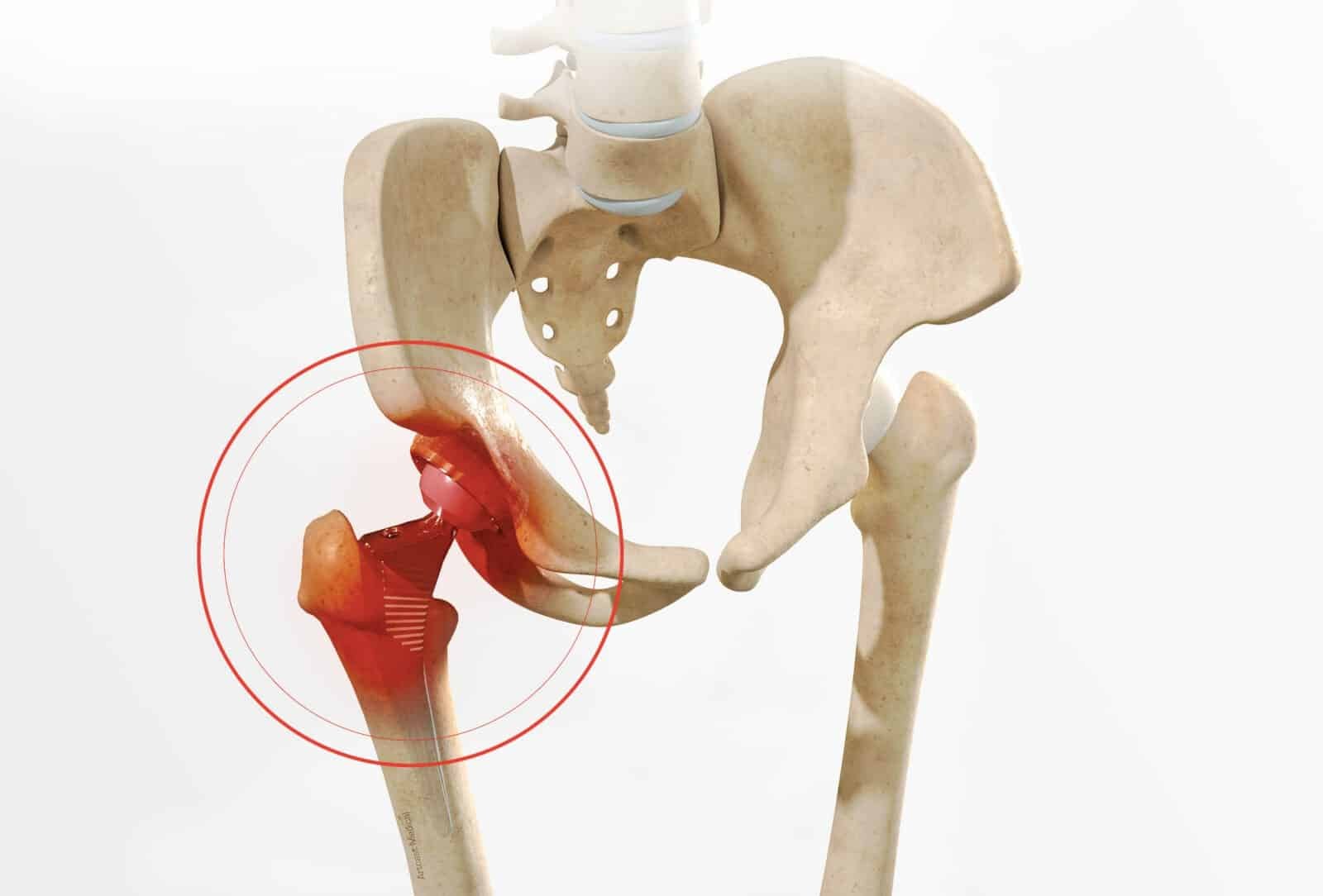
Hip Revision Surgery in Mexico City
Replacing a hip implant that has loosened, worn through or dislocated repeatedly. A longer and more demanding operation than the original replacement — and one that belongs with a surgeon who performs it regularly.
All-inclusive from US$ 21,000
Taking an implant out is harder than putting one in
A primary hip replacement works with healthy bone and a predictable anatomy. A revision does not. The old components have to be removed without destroying the bone holding them, which may have thinned around a loose implant, and the new components have to find purchase in what remains. Bone grafting is often part of the operation.
That is why revision takes longer in theatre, why the recovery is slower than a first replacement, and why the price is different. It is a different operation that shares a joint with the original, not a repeat of it.
What we need before quoting
- Current X-rays of the hip, and any earlier ones you still have
- The operative report from your original replacement, if you can obtain it
- Which implant was used, where and when it was performed
- Whether there has been any suspicion of infection
That last point matters. An implant that has failed because of infection needs a different plan — sometimes staged across two operations — and a surgeon has to establish that before, not during.
If your first replacement was done elsewhere
Most revision patients we see had their original surgery in their home country. That is not a problem, and it does not change how we handle the case. Send what documentation you have; where records are missing, the imaging usually tells the surgeon most of what they need.
Hip revision price
All-inclusive, in US dollars, for surgery in Mexico City.
| Procedure | All-inclusive package |
|---|---|
| Hip Replacement Revision | US$ 21,000 |
Every price is an all-inclusive package for surgery in Mexico City. Your figure is fixed in writing before you travel.
What the all‑inclusive price covers
Everything from the moment you land to the moment you fly home. No hidden cost.
- The surgical procedure
- Board-certified orthopedic surgeon fees
- Certified anesthesiologist and full medical team fees
- Hospital stay in an accredited private hospital
- All supplies, disposables and medication required during surgery
- 7 nights in a 4-star partner hotel
- All pre-operative and post-operative consultations
- All local transportation, including airport transfers
- A bilingual patient assistant throughout your stay
- A physician visiting your hotel room 6 days a week for follow-up and dressing changes
When a hip needs revising
-
Pain that has come back
Groin or thigh pain returning years after a replacement that had been comfortable is the commonest sign of loosening.
-
Repeated dislocations
A hip that has come out of joint more than once points to a component position or a soft-tissue problem that will not settle on its own.
-
Wear visible on X-ray
Thinning of the liner, or a lucent line around the stem or cup, seen on follow-up imaging.
Hip revision questions
-
What Results Can Be Expected from a Total Hip Replacement?
Hip replacement surgery—also called total hip arthroplasty—is highly effective in relieving chronic pain caused by arthritis or injury and restoring mobility. Most patients experience a dramatic improvement in walking ability, joint function, and quality of life. For those searching “benefits of hip replacement surgery,” the key takeaway is that it allows you to return to everyday activities without constant pain or stiffness, especially with advanced surgical techniques like minimally invasive or robotic-assisted hip replacement.
-
Is Hip Surgery an Option if I Have Other Health Conditions?
Yes, hip replacement is often still possible for patients with conditions like diabetes, high blood pressure, or obesity, but it requires thorough pre-surgical evaluation. Your medical team will coordinate care to minimize risks and ensure a safe procedure. If you're searching “can I have hip surgery with other medical conditions,” rest assured that many patients with chronic illnesses successfully undergo this procedure with excellent outcomes.
-
What Is the Lifespan of a secondary Hip Prosthesis?
The lifespan of a revised hip prosthesis depends on factors such as the type of implant, the materials used, and the patient’s activity level. While revision implants may not last as long as primary hip prostheses, advancements in low-wear materials like ceramic have significantly improved durability. In many cases, a well-placed revision implant can last 15 to 20 years or more.
-
Is the hip replacement surgery painful?
This surgery typically causes moderate pain in the first few days after the operation. However, pain is usually well managed with standard pain medications and ice therapy on the hip. Pain perception is highly individual, so experiences may vary from patient to patient.
-
Is it possible to participate in sports with a hip prosthesis?
Yes, but low-impact activities are recommended over high-impact sports. Cycling and swimming are ideal choices, though some patients have successfully engaged in more strenuous activities like skiing. In general, sports should not be resumed before three months post-surgery.
-
What are the risks associated with total hip replacement surgery?
No surgery is entirely risk-free. Common risks include infection, which may require additional surgery and antibiotics, and hematomas, sometimes needing drainage. Blood clots (phlebitis) can occur, potentially leading to pulmonary embolism, which is prevented with anticoagulants. Specific risks of hip replacement include dislocation (especially in the early weeks), leg length discrepancy, and rare complications like femur fractures or nerve damage. While most complications are rare, discussing concerns with your surgeon or anesthesiologist is essential for reassurance.
-
How long is the hospital stay?
The length of hospital stay varies but typically ranges from 1 to 3 days. In some cases, the procedure can be performed on an outpatient basis, allowing patients to return home the same day.
Tell us what hurts. We'll tell you what it costs.
Send your imaging and a short description of your symptoms. A surgeon reviews it and tells you what can be done, how long it takes, and exactly what it costs — at no cost and with no obligation.