
Hip Pain When Sitting and Walking
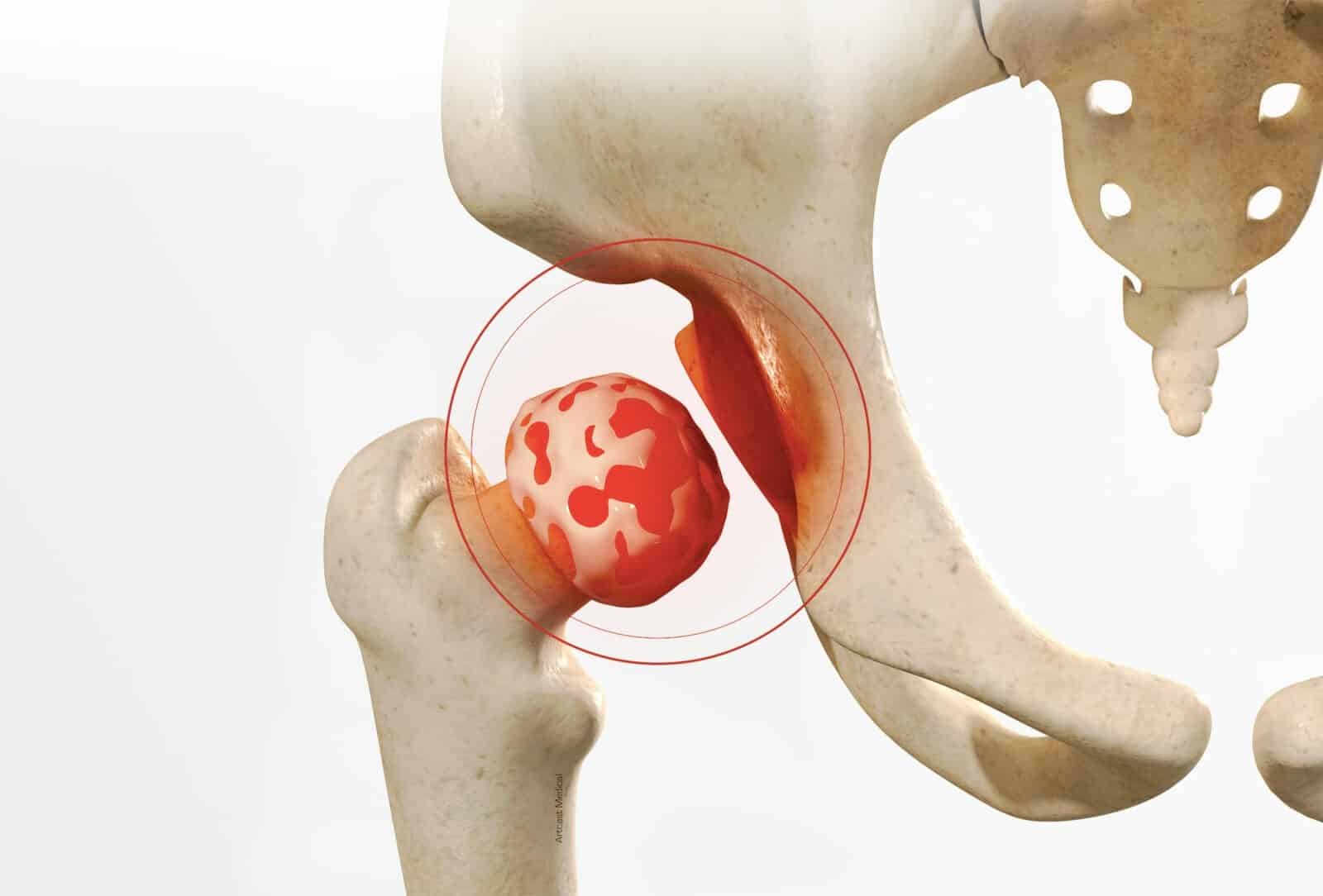
Hip problems are rarely measured in pain scores. They are measured in what has quietly disappeared: the walk you used to take, the shoes you now sit down to put on, the car journey you break in two.
That is the useful way to read hip pain. Not how much it hurts, but what it has taken. This page covers what pain on sitting and on walking usually means, how the diagnosis is actually made, and — the part most articles leave out — the specific criteria that turn a painful hip into a hip replacement.
What hip pain on sitting and walking actually tells you
The hip is a deep joint, and it refers pain badly. Patients point at the outside of the leg when the problem is in the groin, and blame the hip for pain that comes from the back. Two functional clues narrow it down faster than almost anything else:
- Pain that comes on when you sit, especially in a low seat or a car, usually involves flexion — the hip bent past ninety degrees. That points towards the front of the joint: impingement, a labral tear, or arthritis in a hip that has lost its clearance.
- Pain that builds as you walk, and eases when you stop, usually involves load. That points towards the joint surface itself, or towards the tendons that hold the pelvis level.
Neither is a diagnosis. Both are good questions to bring to one.
Where it hurts narrows it further
- Groin, or deep in the front: the joint itself. Arthritis, labral tear, impingement.
- Outside of the hip, tender to lie on: the tendons and bursa over the greater trochanter, not the joint.
- Buttock, worse standing from a chair: the sacroiliac joint or the gluteal tendons.
- Back of the thigh, running past the knee: most often the lumbar spine referring pain down the leg, not the hip at all.
A hip that genuinely needs replacing almost always hurts in the groin. That single detail redirects a lot of consultations.
The common causes
Hip osteoarthritis
Pattern: groin pain that builds with walking, stiffness after sitting, a shrinking walking distance. Later, pain at rest and at night.
What is happening: the cartilage covering the ball and socket wears through. Bone meets bone. It does not regrow, and no exercise programme puts it back.
What helps: activity modification, weight management, physical therapy and anti-inflammatories help symptoms in the earlier stages. They do not change the joint surface. When the surface is gone, replacement is the operation that resolves it.
Hip labral tears
Pattern: catching, clicking or a sharp pinch in the groin, often worse sitting low or twisting. Common in athletes and in younger adults.
What is happening: the ring of cartilage sealing the socket is torn, usually in a hip whose shape puts the rim under repeated pressure.
What helps: rehabilitation first in most cases; arthroscopic repair in selected patients. Importantly, a labral tear in a hip that already has significant arthritis is not usually treated on its own — the arthritis is the problem.
Femoroacetabular impingement
Pattern: groin pain with deep flexion — sitting, squatting, cycling — in a younger, active hip.
What is happening: extra bone on the ball, the socket rim, or both, so the two collide at the end of range and damage the labrum and cartilage over time.
What helps: load management and technique changes, sometimes arthroscopic reshaping. Untreated in the long run, it is one of the recognised routes to early arthritis.
Bursitis and gluteal tendon problems
Pattern: pain on the outside of the hip, worst lying on that side, tender to press. Sitting is often fine; walking, stairs and single-leg stance are not.
What is happening: irritation or degeneration of the tendons that stabilise the pelvis, with the bursa inflamed alongside.
What helps: targeted strengthening rather than rest, load management, sometimes an injection. This is the condition most often mistaken for arthritis — and the one least likely to need surgery.
Referred pain from the back
Pattern: buttock and posterior thigh pain, sometimes past the knee, with numbness or tingling. Hip rotation is painless.
What is happening: a lumbar nerve is compressed. The hip is a bystander.
What helps: treating the spine. A useful rule: if you can cross your legs comfortably and rotate the hip without pain, the joint is probably not the source.
Symptoms that should not wait
- Groin pain at rest or at night, with nothing relieving it
- A limp you cannot correct, or a leg that feels shorter
- A sudden inability to bear weight, especially after a fall — this needs urgent imaging
- Pain with fever, or a hip that is hot and swollen
- A walking distance that has halved over months
- Painkillers becoming daily, rather than occasional
How hip pain is actually diagnosed
- Examination. Range of motion, and which movements reproduce the pain. Loss of internal rotation is one of the earliest and most reliable signs of hip arthritis.
- Weight-bearing X-rays. Standing films, not lying down. A hip can look acceptable lying flat and show bone-on-bone contact under load — this single point changes plenty of management decisions.
- MRI, when a labral tear or a tendon problem is suspected, or when the X-ray does not explain the symptoms.
- A diagnostic injection, occasionally, when the question is genuinely whether the pain comes from the hip or the spine. Relief after an injection into the joint answers it.
As with every joint, imaging supports the decision but does not make it. Arthritic changes are common on the X-rays of people who walk comfortably. What decides is the combination of what the film shows and what you can no longer do.
When hip pain becomes a hip replacement
This is the question the articles usually dodge. Surgeons weigh a short list, and the balance of it — not any single item — is what tips the decision:
- The joint space has gone. Weight-bearing X-rays showing bone on bone, with the cartilage no longer present to protect.
- The pain is present at rest and at night. Pain that persists when the joint is unloaded means the problem is structural rather than inflammatory.
- Function has collapsed in ways you can name. Sitting down to put on socks and shoes. Needing a handrail on every step. Planning your day around walking distance.
- Conservative treatment has run its course. Physical therapy done properly, anti-inflammatories, weight management, injections that relieve less each time and for shorter.
- The trade-off has flipped. The risks and recovery of an operation have become smaller than the cost of another year as you are.
Two cautions belong here. A replacement is excellent at removing arthritic pain and restoring function; it is not a performance upgrade, and it is not the answer to pain coming from the back or from a tendon. And an implant has a working life — most modern hip prostheses are designed to last 15 to 25 years or longer, which matters when the patient is in their fifties and may eventually need a revision.
What the operation involves, and what recovery looks like
The worn ball and socket surface are removed and replaced with a metal stem, a ball and a socket liner. Surgery typically takes one and a half to three hours. Most patients stand the day of surgery, walk with support within days, and come off walking aids within weeks.
The parts that matter to the result are less dramatic: doing the prescribed exercises, respecting the movement precautions your surgeon gives you, and building walking distance gradually rather than in one ambitious afternoon.
Full recovery — stairs without thinking, a normal walking distance, sleeping on that side again — is measured in months rather than weeks, and the second half of that period is about strength, not healing.
The cost of waiting
Waiting is not neutral, and it is worth counting honestly:
- Muscle around a painful hip wastes, and has to be rebuilt afterwards — a longer wait means a longer recovery.
- The other hip, the knees and the lower back absorb the compensation, and start to complain.
- Daily anti-inflammatories carry their own risks over months and years.
- Deformity and severe stiffness can make the operation itself more demanding.
None of this argues for operating early. It argues for deciding deliberately, with imaging and an opinion, rather than by default.
What a hip replacement costs here
We publish our prices rather than quoting on request. Total hip replacement is US$ 15,000 all-inclusive and revision is US$ 21,000 — one figure covering the surgery, the implant, the hospital, seven nights in a partner hotel, every transfer and daily physician follow-up during recovery. It is fixed in writing before you travel, and it is on our price list along with everything else we do.
For the full range of hip procedures, see our hip surgery page.
Frequently asked questions
Is hip pain when sitting a sign of arthritis?
It can be, but it is more characteristic of impingement or a labral tear, especially in a younger hip. Arthritis more typically announces itself as groin pain on walking, with stiffness after sitting rather than pain during it.
Can hip arthritis be treated without surgery?
Symptoms can be managed for years with therapy, weight management, activity changes and injections. What cannot be changed without surgery is the joint surface itself, so the question is not whether non-surgical care works, but how long it keeps your function acceptable.
How do I know if the pain is my hip or my back?
Groin pain and loss of rotation point to the hip. Buttock and posterior thigh pain with numbness points to the spine. When both are plausible, a diagnostic injection into the hip usually settles it.
Am I too young for a hip replacement?
Age alone is not the criterion; function and joint condition are. A younger patient will be counselled about implant lifespan and the likelihood of a revision later, which is a reason to plan carefully — not a reason to spend a decade in pain.
How long before I can walk normally again?
Most patients are walking with support within days and off aids within weeks. A genuinely normal walking pattern, stairs and distance take months, and depend heavily on the rehabilitation you do.
What to do next
If sitting and walking have both become negotiations, the next step is a diagnosis rather than another month of managing it. Send a recent X-ray and a short description of what the hip stops you doing, and a surgeon will tell you what it is, whether replacement is the right operation yet, and what it would cost — in writing, before you commit to anything.