
Pain Behind the Knee: What It Usually Means
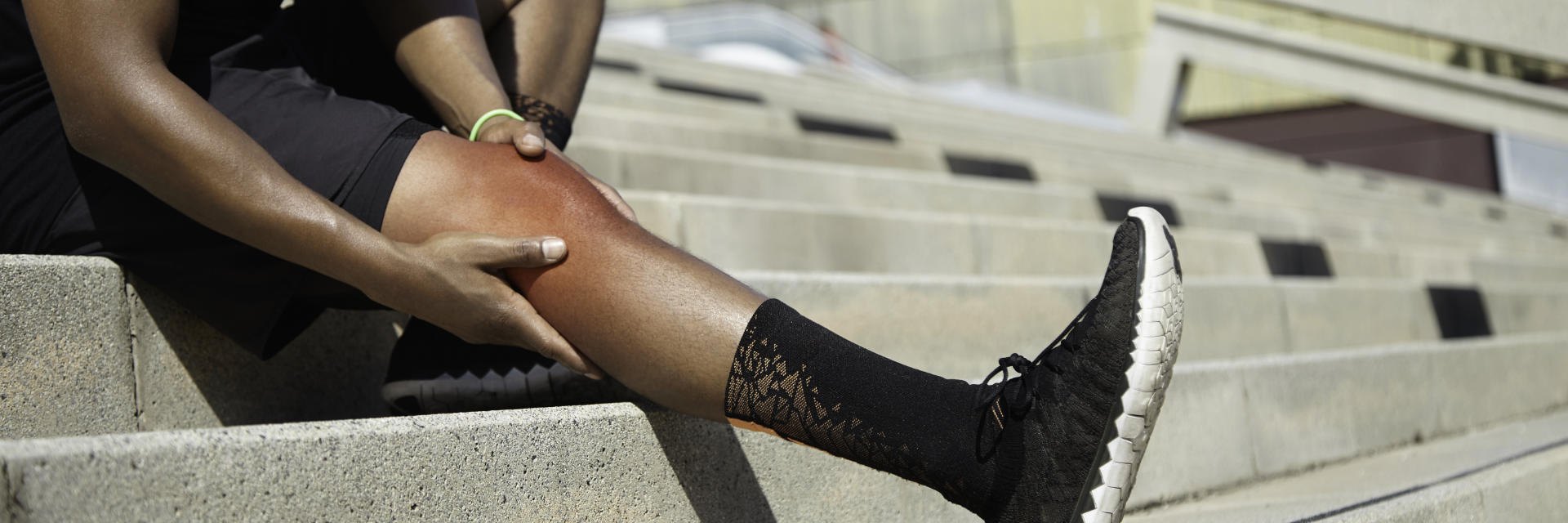
Pain at the back of the knee is harder to interpret than pain at the front. Several structures converge there, the swelling that causes it often sits out of sight, and one of the possible causes is not an orthopedic problem at all — it is a medical emergency.
This page runs through what usually causes it, how the patterns differ, and when to stop reading and seek care the same day.
First, the one that cannot wait
Deep vein thrombosis. A clot in the calf or thigh veins can present as pain behind the knee with:
- Calf swelling, usually on one side only
- Warmth and redness
- Tenderness along the calf rather than in the joint
- Onset after a long flight, after surgery, or during a period of immobility
If that describes your leg, seek medical attention today. No knee diagnosis is worth delaying that assessment.
Baker’s cyst
The most frequent cause of a visible fullness behind the knee.
What it is: a pocket of joint fluid pushed into the back of the knee. It is almost always secondary — the knee is producing extra fluid because of something else, usually a meniscal tear or arthritis.
What it feels like: tightness and fullness rather than sharp pain, worse when the knee is fully bent or fully straightened, sometimes with a palpable lump.
What it means: treating the cyst without treating the cause tends to be temporary. Drain it and it refills, because the knee is still making the fluid.
If it suddenly becomes very painful with calf swelling, a cyst may have ruptured — and because that mimics a clot, it needs assessment rather than guesswork.
Meniscus tear, posterior horn
What it feels like: pain along the back of the joint line, worse with deep squatting or twisting, sometimes with catching. Swelling that comes and goes after activity.
Why it ends up here: the back portions of both menisci are the most commonly torn, so posterior knee pain is a frequent presentation.
What is done about it: it depends entirely on the tear pattern and on whether the knee locks — the subject of our guide on how a meniscus tear is diagnosed. When surgery is needed, repair rather than removal is the aim wherever the tear allows it.
Hamstring and calf origin problems
What it feels like: pain slightly above and to one side of the crease, tender to press, provoked by sprinting, hill work or loaded hamstring movements. The joint itself feels normal.
What is done about it: progressive loading rather than rest. Tendinopathy at these attachments responds to strength work and to controlling the training spike that caused it.
Posterior cruciate ligament injury
What it feels like: after a direct blow to the front of the bent knee — a dashboard, a fall onto the knee — deep pain at the back, with a sense of instability going down stairs or slopes.
What is done about it: isolated PCL injuries are frequently managed without surgery, with quadriceps strengthening as the core of it. Combined ligament injuries are a different matter.
Arthritis at the back of the joint
What it feels like: stiffness after sitting, pain that builds through the day, a grinding sensation, sometimes a Baker’s cyst as the visible sign.
What is done about it: the usual arthritis ladder — load management, strengthening, weight if relevant, injections — and, when the joint surface is gone and function has collapsed, knee replacement.
How the pattern narrows it down
| What you notice | What it points to |
|---|---|
| Fullness or a lump, tight when bending | Baker’s cyst, with something driving it |
| Catching or locking, pain on twisting | Meniscal tear |
| Tender above the crease, hurts when sprinting | Hamstring origin tendinopathy |
| Instability on stairs after a direct blow | PCL |
| Calf swelling, warmth, one side only | Possible clot — same-day assessment |
How it is diagnosed
An examination identifies where the tenderness actually sits and tests the ligaments and menisci. An ultrasound is useful for a cyst and for the hamstring tendons, and it is also the test used to rule out a clot. An MRI is reserved for cases where the answer will change the plan — most often a suspected meniscal tear.
X-rays do not show any of these soft tissues, but they do show arthritis, which is frequently the thing behind the thing.
When to see a specialist
- The knee locks or will not straighten
- Swelling that recurs after every session
- Pain that has not settled after four to six weeks
- A lump that is growing
- Any of the clot signs above — immediately
What treatment costs if surgery is needed
Diagnostic and therapeutic knee arthroscopy is US$ 9,500 all-inclusive, meniscus repair is US$ 11,300, and knee replacement is US$ 11,500. Everything we charge is published on our price list, and the full range of knee procedures is on our knee surgery page.
Frequently asked questions
Can a Baker’s cyst go away on its own?
It can, particularly if whatever is irritating the knee settles. Because it is usually secondary to a tear or to arthritis, the durable fix is treating that underlying problem.
Is pain behind the knee a sign of arthritis?
It can be, especially with morning stiffness and a grinding sensation. But in younger knees a meniscal tear or a tendon problem is more likely.
Should I keep running?
If the pain is tendinous and does not worsen during or after the run, modified running is usually fine. If the knee swells or locks, stop and get it looked at — swelling is the knee telling you something structural is going on.
Does a cyst need to be drained?
Draining relieves pressure but does not address the cause, so cysts commonly refill. Treating the meniscal tear or the arthritis driving the fluid is what resolves it properly.
What to do next
If the knee swells, locks or has not settled in six weeks, send your imaging or simply describe what the knee does, and a surgeon will tell you which structure is likely involved and whether it needs an operation — in writing, before you commit to anything.